Expert Cool Roofing for Tucson & Southern Arizona
David Contreras, owner of DC Roofing of Arizona (ROC #328733, licensed, bonded and insured), has been roofing in Tucson since 2011. Cool roofing gets sold as the answer to almost any hot house, and it isn't. It works well on the right kind of roof and does very little on the wrong one. Below is what a cool roof is, which Tucson roofs are real candidates (mostly flat and low-slope ones), and why tile roofs usually are not.
Watch: DC Roofing of Arizona in Action
What Cool Roofing Means for Flat and Low-Slope Roofs
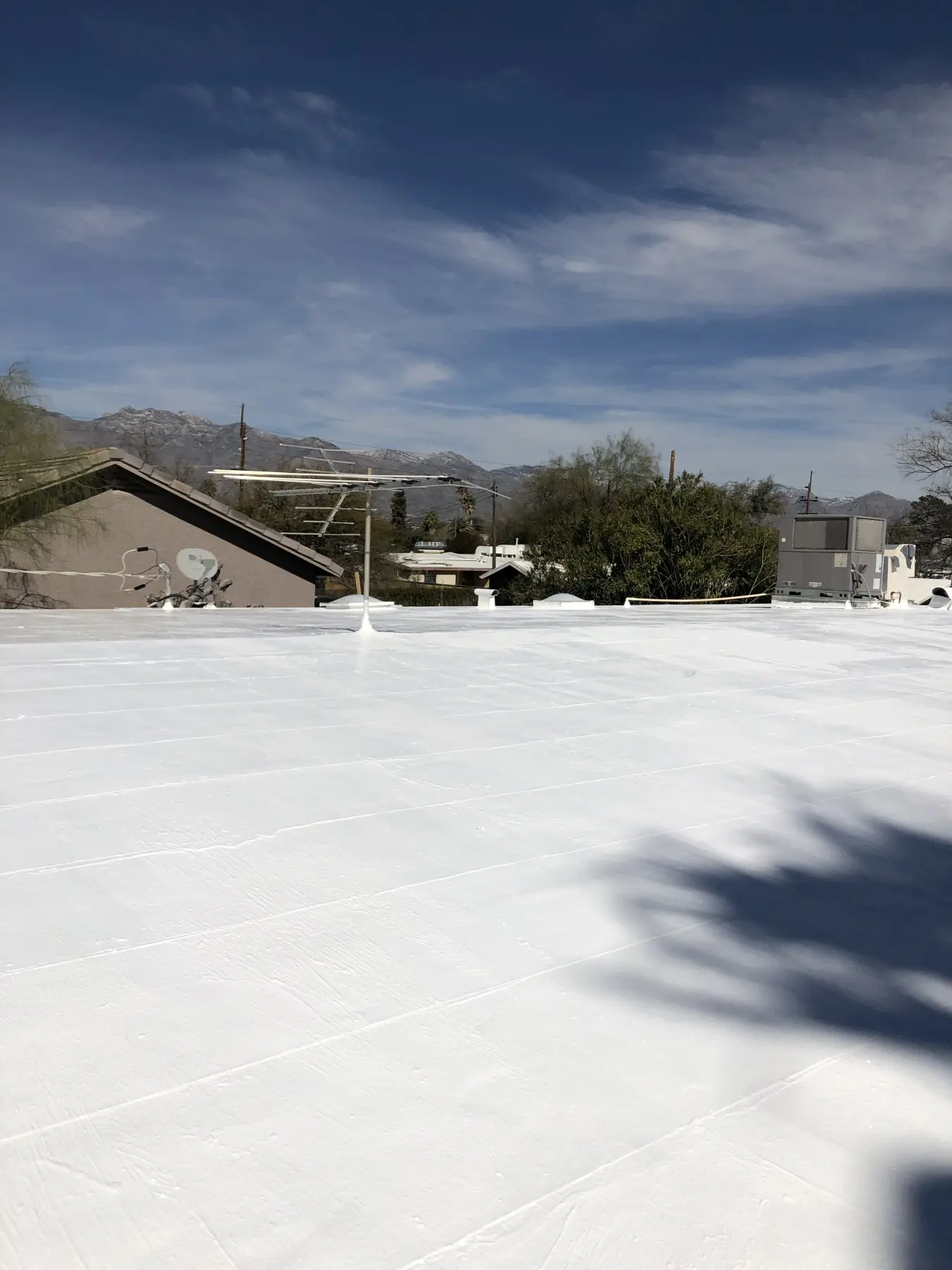
A cool roof is a reflective surface that sends sunlight back instead of soaking it in. ENERGY STAR explains that a cool roof both reflects sunlight and releases heat, and that a clean white roof reflecting 80% of sunlight stays about 50°F cooler than a gray roof reflecting 20% on a typical summer afternoon. On flat and low-slope roofs in Tucson, that usually means a silicone or elastomeric coating over a properly prepped roof. The coating is only the last step. The roof underneath has to be sound first.
Stand on a dark flat roof in July and you can feel it through your boots. Berkeley Lab's Heat Island Group reports that dark roofs can reach 150°F or higher in summer, and that heat doesn't stay on the roof. It pushes down into the deck, the insulation, and eventually the rooms below. The EPA says that in air-conditioned buildings, a cool roof can reduce peak cooling demand by 11 to 27%. Your result depends on the roof, the insulation and how the building is used, so we don't promise a number for your bill.
But cool roofing isn't a paint color. It's a system. If the membrane under it is split, the parapet flashing is loose, or water sits in a low spot for days after a storm, a white coating won't fix any of that. It just makes the problem harder to see, and a bright white surface can hide a roof that is failing underneath.
A good cool roof job includes:
- A sound substrate. Foam, modified bitumen, TPO or whatever is down there has to be dry and intact.
- Clean prep. Power washing, primer where it's needed, and repairs to seams and blisters before anything reflective goes on.
- Detail work at penetrations. Evaporative cooler curbs, vents and drains get reinforcing fabric, not just a swipe of coating.
- Correct coating thickness. Too thin, and Tucson's UV wears through it early.
Silicone is generally the better fit where water ponds, while elastomeric acrylic stretches well with heat swings and usually costs less per square foot. Which one belongs on your roof depends on drainage, the existing surface and how much foot traffic it sees. We're manufacturer-certified (GAF, Polyglass and APOC), and we spec the coating off what is actually up there. See our silicone roof coating and elastomeric roof coating pages, or the overview of our roof coating service.
Tile Roofs Usually Don't Qualify for Cool Roof Coating
Here's the part most articles skip. If your house has clay or concrete tile, a cool roof coating probably isn't for you. About 90% of the re-roofs we do are tile, and coating a tile field doesn't do what people hope it will.
Tile isn't the waterproof layer. The underlayment beneath it is. Tile sheds most of the water and shades the deck, and the felt or modified membrane under it does the actual sealing. Painting the top of the tile doesn't fix a leak. It just changes the color of something that was never holding water back in the first place.
Tile also vents better than people assume. Most tile systems leave an air gap under the tile that moves heat away before it reaches the deck. When a tile home runs hot upstairs, the fix is usually attic ventilation or worn underlayment, not a reflective topcoat. Our roof ventilation page covers that side of it.
Where coating does make sense on a tile home is a flat section. Plenty of Tucson houses are hybrids, with tile on the pitched areas and a low-slope patio cover, carport or back addition that is really a small flat roof. That piece can be a real candidate. The tile isn't.
If someone quotes you a coating over your whole tile roof to lower your electric bill, ask what problem it solves. We'd rather tell you your roof doesn't need this than sell you something that won't earn its keep.
Deciding Between a Coating and a Full Roof System
A coating is a surface. It's not a roof. If the layers under it are wet, blistered or coming apart, coating over them buys a season or two of quiet before the same leak comes back in a worse spot.
The test on a flat or low-slope roof is simple. Is the substrate dry and bonded? Are the seams and penetrations still intact? Does the deck feel solid underfoot, or does it give a little? If the answers are good, a coating is the smarter spend. You get reflectivity, a new waterproof skin, and you keep the roof you already paid for.
Soft spots change the math. Trapped moisture is the big one. Once water is sitting inside the roof assembly, summer heat pushes it upward and it can blister right through a fresh coating. On older flat roofs with evaporative cooler curbs, a slow cooler leak is a common culprit, and nobody notices until a ceiling stains.
A coating is priced very differently from a tear-off and new system. With a coating you are paying for prep, penetration detail work and the coats themselves. With a replacement you are also paying for disposal, decking repair and insulation. Ask any contractor to break those out separately. It tells you fast whether they actually inspected anything. Our guide to roof replacement cost goes deeper on the replacement side.
We'd rather tell you a coating will hold than sell you a roof you don't need yet.
Preparing a Roof for Coating: Inspection and Repair Come First
A cool roof coating is the final layer of a system, and it only performs as well as what's underneath it. Roll a bright white coating over a soft deck, a split seam or flashing that's already leaking, and you've built an expensive lid for a problem that is still growing. When a coating fails early, prep that got skipped is usually the reason, not the coating itself.
Before anything is applied, the roof gets walked and inspected:
- Walk the whole surface and press for soft spots. Wet insulation under a membrane has to come out. It won't dry on its own.
- Check every penetration: vents, pipes, skylights and especially evaporative cooler curbs, which are one of the most common leak sources on Tucson roofs.
- Inspect parapet walls and flashing. Heat cycling pulls sealant loose year after year, and those joints open up quietly.
- Look at drains and low spots. The National Roofing Contractors Association notes that ponding water left standing more than 48 hours after rain can damage a membrane roof.
- Confirm the existing surface is compatible with the coating system being specified.
Then the repairs happen. Seams get reinforced, penetrations get detailed with fabric and base coat, and ponding areas get addressed where the situation calls for it. The surface is cleaned, often power washed, and it has to be completely dry before coating starts. For repair-first situations, see our flat roof repair page.
Sometimes the honest answer is that a roof isn't a coating candidate at all. If the deck is compromised or the membrane is past saving, coating it is money spent on a roof that needs replacing. David does these inspections himself, and the inspection is free.
Timing Application Around Tucson's Monsoon Season
A coating needs a dry surface going on and a rain-free window while it cures, and the length of that window depends on the product. Monsoon season officially runs June 15 through September 30, and that is exactly when a rain-free window is hardest to promise. A pop-up afternoon storm can wash a fresh coat off a low-slope roof before it sets.
Heat is the other half. A dark flat roof can pass 150°F on the surface in the afternoon, and manufacturers set surface-temperature limits for application, so coating work is planned around the cooler part of the day.
- October through May: the widest, most reliable window for coating work here.
- Early June, before storms build: workable, but we watch the forecast day by day.
- July and August: repairs and prep are fine, but full coating only in a confirmed dry stretch.
- Late September into October: storms taper off and temperatures drop, which makes it a good time to schedule.
If it's mid-monsoon and your roof is leaking, call us. We'll look at it and schedule the coating for when the weather allows. There's no point coating over a wet deck just to say it was done.
Energy Code and Cool Roof Rules
Energy code rules apply through the city or county where the roof sits. Tucson and Pima County both adopt the International Energy Conservation Code with local amendments, and what applies to you can depend on the building type and whether the job is a re-roof or new construction. Some projects, commercial re-roofs in particular, may carry reflectance requirements. We check the current rules for your address before recommending a product instead of assuming.

David Contreras, Owner & Founder - DC Roofing of Arizona · Licensed ROC #328733 · Tucson native since 1989
Cool Roofing Projects Completed in Tucson
How Our Cool Roofing Process Works
- 1
Roof Walk and Inspection
David walks the roof and presses for soft spots, then checks seams, flashing, drains and every penetration, especially evaporative cooler curbs. If the roof is not a coating candidate, you hear that before any work is scheduled.
- 2
Repairs Before Anything Reflective
Split seams, failed sealant, loose flashing and blisters get repaired first. Wet insulation is cut out rather than covered, so the coating has a sound surface to bond to.
- 3
Cleaning and Drying
The roof is cleaned, often power washed, and has to be completely dry before coating starts. Primer goes down where the existing surface calls for it.
- 4
Reinforce Penetrations and Apply the Coating
Penetrations, seams and drains are detailed with reinforcing fabric and base coat, then the silicone or elastomeric coating goes on in coats to the manufacturer's specified thickness. Thin coats are how coatings fail early in Tucson's UV.
- 5
Cure and Final Walkthrough
The coating cures on a schedule built around the forecast. We walk the finished roof to confirm full coverage and even thickness, and go over drainage and upkeep with you.
Ready to Get Started?
Fast response. Licensed ROC #328733. 4.8★ across 100+ Google reviews.
Cool Roofing Services We Provide in Tucson and Southern Arizona
What Tucson Homeowners Gain from Choosing DC Roofing of Arizona
Cool Roofing in Tucson, Oro Valley, Marana, Sahuarita, Green Valley, and Vail
DC Roofing of Arizona provides cool roofing services throughout Southern Arizona, including:
Frequently Asked Questions About Cool Roofing in Tucson
Can I put cool roof coating on my tile roof?
Usually not, and it usually won't help. Tile sheds water and shades the deck on its own, and the underlayment beneath it does the actual waterproofing. Painting over tile just changes its color. If your home has a flat section, like a patio cover or carport addition, that part can be a real candidate. But the tile field itself almost never needs it.
How do I know if my flat roof is ready for a cool coating?
A roof is a good candidate when the substrate is dry, the seams are still bonded and the deck feels solid underfoot. We check for soft spots, trapped moisture and loose flashing before recommending anything. If those checks come back clean, a coating gives you a fresh waterproof layer over a roof you already paid for. If not, coating over problems just hides them until they come back worse.
Why did my roof coating fail after a couple of years?
Most early failures trace back to prep that got skipped, not the coating itself. If a soft deck, split seam or leaking flashing gets covered instead of repaired, water keeps moving underneath and eventually blisters through. We walk the whole roof and fix seams, penetrations and flashing before anything reflective goes on. A coating applied too thin will also wear out early in Tucson's UV.
What causes ponding water on flat roofs in Tucson?
Ponding usually happens in low spots or around clogged drains that don't clear after a monsoon storm, and it is more common on older flat roofs. The National Roofing Contractors Association notes that water left standing more than 48 hours after rain can damage a membrane roof. Silicone generally handles standing water better than elastomeric acrylic, which is one reason the right coating depends on your roof's drainage.
Should I coat my roof or replace it?
That depends on what's happening under the surface, not how the roof looks on top. If the membrane is dry and intact, a coating is usually the smarter move and keeps the roof you already have. If there's trapped moisture or a soft deck, a coating just delays a bigger repair. We inspect the substrate first and tell you which one your roof needs.
Why does my upstairs get so hot even though I have a tile roof?
A hot upstairs under tile is rarely solved by a coating. Tile already has an air gap under it that vents heat before it reaches the deck. The more common causes are poor attic ventilation or worn underlayment letting heat and moisture through. We check the attic and underlayment first, since that's where the fix usually lives on a tile home.
Will a cool roof make a noticeable difference in Tucson?
On the right roof, it can. ENERGY STAR says a clean white roof reflecting 80% of sunlight stays about 50°F cooler than a gray roof on a typical summer afternoon, and the EPA reports that a cool roof can cut peak cooling demand in air-conditioned buildings by 11 to 27%. How much you notice depends on your roof type, insulation and how the building is used. Tile homes usually gain little from a coating, which is why we inspect before we recommend one.
How long does a cool roof coating last in Tucson?
It depends on the product, how well the roof was prepped, how thick the coating went on and how the roof is maintained afterward. With the two coats we apply, an acrylic elastomeric coating typically needs a recoat about every five years, and silicone applied correctly typically lasts about 10. We back our coating work with a 5-year labor warranty. Keeping drains clear and clearing debris after monsoon storms helps a coating hold its reflectivity and keeps moisture from settling at the edges.