Expert New Construction Roofing for Tucson & Southern Arizona
David Contreras, owner of DC Roofing of Arizona, has been roofing in Southern Arizona since 2011 — which means he's put new construction roofs on builds throughout the Catalina Foothills, on custom homes in the newer developments south of town, and on everything in between. He coordinates directly with builders on every new construction project, licensed under ROC #328733, so the people running your build know exactly who they're dealing with. New home construction roofing is one of the most detail-sensitive jobs in the trade, and David handles it personally.
Why New Construction Roofing Is Different From a Replacement
Most people assume a roof is a roof. But new home construction roofing and a roof replacement are two different jobs. With a replacement, there's already a structure underneath. Decking is in place. Flashing exists. We're tearing off old material and putting new material on top of something that's been weathered and patched.
New construction is a blank slate. On a new build, the roof has to be timed with every other trade on site. Framers finish, then we step in before HVAC, electrical, and plumbing crews need access. If we're late by two days, the whole project stalls. If we rush and skip steps, the inspector sends everyone back to square one. We coordinate directly with builders throughout the Catalina Foothills and newer developments south of town — tight scheduling is something we deal with on every project.
Here's what makes new construction roofing different from a replacement:
- We're installing on fresh lumber and new decking, so every fastener pattern and underlayment layer has to meet current Tucson building code from day one
- There's no existing leak history to guide decisions — we're building protection from scratch based on the home's design and orientation
- Penetrations for vents, HVAC curbs, and evaporative cooler mounts need to be planned before the roof goes on, not cut in after
- Flashing details around parapet walls, skylights, and chimney chases get one chance to be done right
A replacement fixes what went wrong. New construction roofing is your chance to get it right the first time.
Choosing the Right Roof System for Desert New Builds
The roof system you pick for your new build in Tucson affects energy costs, how often you'll need maintenance, and how long the whole thing lasts under relentless sun. Here's what we see working well on new construction around Tucson:
- Concrete and clay tile handle UV exposure and thermal cycling better than most options. They're the dominant choice across neighborhoods like Catalina Foothills and HOA-governed communities throughout the metro. For new construction, the underlayment system beneath the tile is the most critical specification decision — synthetic underlayment significantly outperforms traditional 30-lb felt and the cost difference at build time is small relative to tile-off replacement later.
- Metal roofing reflects heat and stands up to monsoon winds. It's lighter than tile and works great on certain architectural styles.
- Foam roofing creates a seamless, insulated barrier on flat or low-slope builds. Popular on modern desert designs.
- Asphalt shingle roofing fits tighter budgets on new builds where HOAs don't require tile. Impact-resistant architectural shingles with proper ventilation and quality synthetic underlayment can deliver 25–30 years of solid performance in Tucson's climate.
Start with the roof slope. A steep pitch opens up tile and metal. A flat or low-slope design points toward foam or a cool roofing system with elastomeric coatings. Your builder's structural plan matters too — tile is heavier and needs framing that can support the load. Every penetration is a leak point, so the system you choose needs to handle evaporative cooler mounts, HVAC curbs, vents, and future solar panel roofing prep cleanly from day one. We'll walk your build site, look at the plans, and tell you what makes sense. No upsell.
The New Construction Roofing Process, Step by Step
New home construction roofing in Tucson follows a clear sequence, and skipping any part of it creates problems you won't see for months. Here's how we handle it from start to finish, in the order it actually happens on site:
- Framing inspection and measurement. We walk the roof deck with your builder before anything goes on. We're checking for level sheathing, proper nailing patterns, and correct overhang dimensions. If something's off, we flag it now.
- Underlayment installation. This is your real moisture barrier. We lay synthetic underlayment across the entire deck, overlapping seams to handle Tucson's monsoon-driven rain. On flat or low-slope sections, we use a self-adhering membrane for extra protection.
- Flashing and penetration prep. Every vent pipe, HVAC curb, and skylight opening gets custom flashing. Evaporative cooler penetrations — common on nearly every Tucson build — each need to be sealed correctly the first time. These are the details Pima County inspectors look at closely because they know our monsoon season punishes sloppy work.
- Material installation and ventilation setup. Whether it's concrete tile, metal panels, or foam roofing, the crew installs according to manufacturer specs and local building code with proper fastening patterns for Arizona wind loads. Ridge vents or off-ridge vents go in based on your roof design — without proper airflow, your attic hits 160 degrees in July.
- Final inspection, cleanup, and CO documentation. We do our own quality check before the city inspector arrives. Then we clean the site — nails swept, debris hauled, landscaping respected. We provide all documentation required for your Certificate of Occupancy, manufacturer warranty registration, and any lien waivers needed at project close.
Permits, Inspections, and the Certificate of Occupancy
Your roof has to pass multiple inspections before you can move into your new home. No passed roof inspection, no certificate of occupancy. The City of Tucson and Pima County both require building permits for new home construction roofing. Your general contractor usually pulls the main building permit, but the roofing scope falls under that permit and gets its own inspection checkpoints.
A typical new construction roof goes through three stages of inspection:
- Deck inspection — the inspector checks the roof sheathing and structural framing before any underlayment goes down
- Underlayment and flashing inspection — confirming moisture barriers and penetration details meet code
- Final roofing inspection after the finish material is installed, verifying everything from drip edges to ventilation
Each one has to be scheduled, passed, and documented. Roofing is one of the top three inspection failure categories in residential construction nationwide — that's why we build to pass the first time. We've done this on builds from the Rita Ranch area all the way across to Starr Pass. David coordinates directly with your builder so nothing gets missed. We carry ROC #328733 and full insurance, so your builder and your inspector both know they're dealing with a legitimate operation. Nobody wants their move-in date pushed back over a roofing issue. We make sure that doesn't happen. For more information on our approach from the builder's perspective, see our roof installation service page.
Protecting Your New Roof Through Tucson's First Monsoon Season
Monsoon season hits hard — wind gusts over 60 mph, driving rain that comes sideways, and debris flying off mesquite trees across neighborhoods like Rita Ranch and the Catalina Foothills. A brand new roof can handle all of it, but only if a few things get checked before that first big storm cell rolls in.
We recommend a quick roof inspection about 30 days after new construction roofing is complete, especially if that window falls between April and June. Roofing materials expand and contract constantly in Tucson's heat. That movement is normal — a quick look before the storms is just smart. If something does come loose during a monsoon, David stays on top of storm calls personally, so you're not stuck waiting on a callback from a dispatch center.

David Contreras, Owner & Founder — DC Roofing of Arizona · Licensed ROC #328733 · Tucson native since 1989
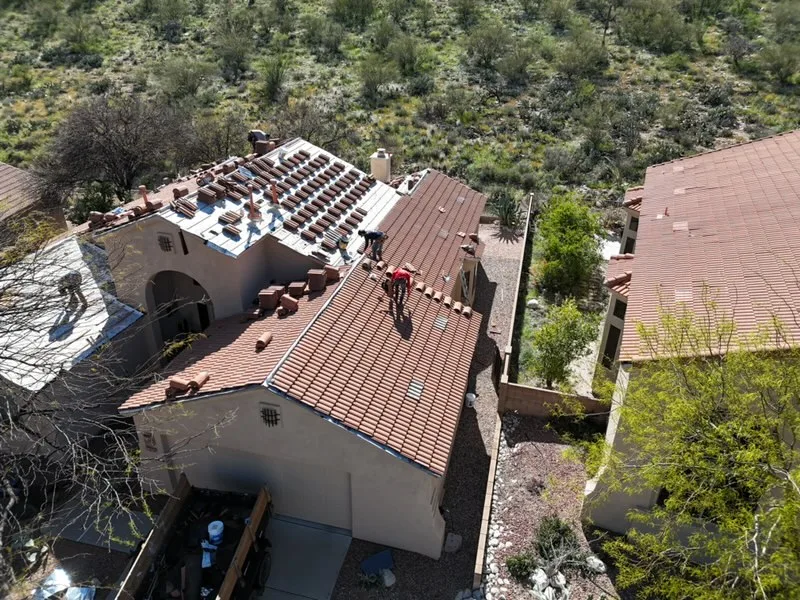
How Our New Construction Roofing Process Works
- 1
Site Walk & Material Selection
We walk the build site with your builder and review the plans before anything goes on. We confirm roof slope, structural framing capacity, HOA requirements, and penetration locations, then select the right roofing system for the design and Tucson's climate.
- 2
Deck Inspection & Underlayment
We check sheathing, nailing patterns, and overhang dimensions before installation begins. Synthetic underlayment goes down across the entire deck with properly overlapped seams. On flat or low-slope sections, a self-adhering membrane adds a second layer of protection.
- 3
Flashing & Penetration Details
Every vent pipe, HVAC curb, skylight opening, and evaporative cooler penetration gets custom flashing before the field material goes on. These details are planned into the roofing process from day one — not cut in after — because each penetration is a potential leak point on a Tucson home.
- 4
Roofing System & Ventilation Installation
Field material goes on to manufacturer specs and current Tucson building code, including correct fastening patterns for Arizona wind loads. Ridge vents or off-ridge vents are installed based on the roof design to keep attic temperatures manageable through the summer.
- 5
Inspection, Cleanup & CO Documentation
We conduct our own quality walkthrough before the city inspector arrives — checking flashing, fastener patterns, underlayment seams, and every penetration. After a clean pass, we sweep nails, haul debris, and deliver all documentation required for your Certificate of Occupancy and manufacturer warranty registration.
Ready to Get Started?
Same-day response. Licensed ROC #328733. Tucson's most trusted crew.
New Construction Roofing Services We Provide in Tucson and Southern Arizona
What Tucson Homeowners Gain from Choosing DC Roofing of Arizona
New Construction Roofing in Tucson, Oro Valley, Marana, Sahuarita, Green Valley, and Vail
DC Roofing of Arizona provides new construction roofing services throughout Southern Arizona, including:
Frequently Asked Questions About New Construction Roofing in Tucson
How does new construction roofing in Tucson differ from a standard roof replacement?
New construction roofing starts from a blank slate, while a replacement builds on an existing structure. On a new build, we install on fresh lumber and new decking, and everything has to meet current Tucson building code from day one. There's no leak history to guide us — we're planning penetrations for HVAC, vents, and evaporative coolers before the roof goes on. One chance to get it right.
What roof materials work best for new home builds in Tucson's climate?
Concrete and clay tile handle Tucson's UV exposure and thermal cycling better than most options. Metal roofing reflects heat and holds up well through monsoon winds. Foam roofing works great on flat or low-slope modern builds. Your roof slope and structural framing guide the final call — tile is heavier and needs framing built to support that load. We walk your build site and look at the plans before recommending anything.
How much does new construction roofing cost in Tucson?
New construction roofing costs vary by material and roof complexity. Concrete tile on a standard new home (1,800–2,500 sq ft plan area) typically runs $15,000–$30,000 installed. Asphalt shingle systems on the same footprint run $8,000–$15,000. Metal roofing runs $20,000–$45,000+ depending on system type. These ranges include all labor, materials, underlayment, flashing, and permit coordination. DC Roofing of Arizona provides detailed written estimates — call (520) 979-9095.
How does scheduling work when you're roofing a new construction project?
Timing is everything on a new build. We step in after framers finish and before HVAC, electrical, and plumbing crews need access. A two-day delay can stall the whole project. We coordinate directly with builders across Tucson to stay on schedule. If we rush and skip steps, the inspector sends everyone back. We build our schedule around your builder's timeline from the start.
Do evaporative cooler penetrations cause roofing problems on new Tucson homes?
Evaporative cooler penetrations are one of the most common leak points we see on new builds in Tucson — we see them on nearly every project, including homes in neighborhoods like Rita Ranch. Each penetration needs custom flashing and a proper seal before the rest of the roof goes on. Cutting them in after installation creates problems. Planning them into the roofing process from day one is how you avoid future leaks.
Why does attic ventilation matter so much on new construction roofs in Tucson?
Without proper attic ventilation, your attic can hit 160 degrees in July. That heat shortens the life of your roofing materials and drives up cooling costs. On every new build in Tucson, we install ridge vents or off-ridge vents based on your roof design. Getting ventilation right during construction is far easier than fixing it later. It protects your roof and your energy bills from the first summer.
What's the best underlayment for new homes in Tucson?
Synthetic underlayment significantly outperforms traditional 30-lb felt in Tucson's heat and UV environment. Synthetic polymer underlayment rated for 12-month exposure tolerates construction delays without degrading, performs better under tile in the high-temperature attic environment, and provides a meaningfully longer service life. For new construction where the roof is being built once, the incremental cost of premium underlayment is a small fraction of the total roofing cost and a significant contributor to long-term performance.
Does new construction roofing require a permit in Pima County?
Yes — new construction always requires a building permit, which includes the roofing scope. The City of Tucson and Pima County require inspections at deck, underlayment/flashing, and final stages before a certificate of occupancy can be issued. DC Roofing of Arizona coordinates all roofing-specific inspection requirements with your builder, ensures all sign-offs are obtained, and delivers complete permit documentation as part of the project.