Expert Silicone Roof Coating for Tucson & Southern Arizona
David Contreras, owner of DC Roofing of Arizona (ROC #328733, licensed, bonded and insured), has been roofing in Tucson since 2011. We apply silicone coatings on flat and low-slope roofs, and David walks every roof himself before recommending one. Silicone is a good product for the right roof. This page covers why it suits roofs that pond, how it compares with acrylic, and when it is the wrong fix.
Watch: DC Roofing of Arizona in Action
Ponding Water Is the Real Test for Silicone Coating
Silicone is formulated to resist ponding water, which is why it gets picked for low-slope Tucson roofs that don't drain well. But a coating won't move water off your roof, so drainage problems still have to be fixed before anything goes down.
Walk a flat roof two days after a monsoon storm and you'll find the low spots fast. Water pools near drains that sit slightly high, around old evaporative cooler curbs, and in sags in the deck. Those puddles are where many coatings fail. Acrylic coatings are water-based, so standing water can soften them over time and work them loose right where you need the most protection. Silicone doesn't have that weakness, and it is the single biggest reason we reach for it on roofs that pond.
Here's the part nobody likes hearing. Coating doesn't change slope. If your roof holds a few inches of water in a corner because the deck sagged, it will hold that water after we coat it. The silicone can handle it, but the weight is still sitting there and the dirt still collects. On older flat roofs where decades of patching have flattened the original slope, the right call is sometimes adding tapered insulation or correcting a drain before any coating goes on, and we'll say so.
Tucson's rain comes mostly in monsoon storms between June 15 and September 30. Your roof doesn't need to handle steady drizzle. It needs to handle a heavy burst and then sit in whatever is left in 100-degree heat. If a contractor looks at a ponding roof and quotes a coating without ever mentioning drainage, ask why.
Silicone vs. Acrylic: Choosing the Right Coating
Both go on with a roller or a sprayer, and both finish white. The differences matter on a Tucson flat roof.
Acrylic isn't junk. It's easier to recoat later, it tends to stay cleaner-looking, and on a well-drained roof with real slope it can hold up fine. It also usually costs less per square foot, which is a real consideration on a big deck. Our elastomeric roof coating page covers when we recommend it.
Here's how we sort it out on site:
- Does the roof hold water anywhere after rain? If yes, silicone.
- Is there an evaporative cooler, a skylight curb or a lot of pipe penetrations? Silicone handles those transitions well when they're detailed properly.
- Is the existing surface a failed acrylic? Silicone generally can't just go over it. It takes heavy prep, a compatible primer and an adhesion test, and some silicone products aren't approved over acrylic at all.
- Is the deck sound, just chalky and sun-beaten, with good drainage? Acrylic may be plenty.
- How long do you plan to own the building? A short hold changes the math.
Two more things worth knowing. Silicone holds dirt, so it can look dingy over time, and that dirt can dull its reflectivity. That's mostly cosmetic, and we'd rather tell you now than have you call in year three thinking something went wrong. And future recoats have to use compatible silicone products. You can't put acrylic over cured silicone without significant surface preparation. We're manufacturer-certified (GAF, Polyglass and APOC), so we work inside a coating system instead of grabbing a bucket off a shelf. For a comparison of all our coating options, see the roof coating service page.
When Silicone Coating Isn't the Right Fix
Silicone roof coating isn't a fix for every flat roof. Coating is a surface product. It seals and protects what's underneath, but it doesn't rebuild it. If the deck is soft or the insulation under the membrane is soaked, silicone just locks that water in, and you'd be paying for a raincoat over a wet sponge.
- Wet or saturated insulation under the membrane. A coating traps it, and the deck keeps deteriorating where you can't see it.
- Structural problems: a sagging deck, ponding that never drains, or a deck that flexes underfoot. Fix the structure first.
- A roof at the end of its life. Ten patched seams, a brittle membrane or gravel showing through is a replacement conversation, not a coating one.
- Steep tile or shingle roofs. Silicone is a low-slope product, and most Tucson homes are clay or concrete tile, which need different work entirely.
- Active leaks that haven't been traced. Evaporative cooler penetrations are one of the most common leak sources on Tucson roofs, and a coating won't fix a bad pan or curb.
Timing matters too. Silicone needs a dry, clean surface and reasonable cure conditions, so rolling it out just ahead of a monsoon storm is how you get a coating that never bonds right. Sometimes the honest answer is to wait a few weeks.
And sometimes it's simpler. If your roof is only a few years old and one flashing detail is leaking, that's a repair, not a coating system. See our flat roof repair page for that side of it, and our guide on whether your roof really needs replacing if you're weighing replacement.
The only way to know which bucket you're in is for someone to get on the roof and check: moisture, membrane condition, seams and drainage. That's what our free roof inspection is for.
What Happens Before, During, and After Application
Most of the work happens before a drop of silicone goes down. The coating is the easy part. Prep is where the job is won or lost.
- We walk the roof and check for moisture. Wet insulation under the membrane has to come out first, because coating over it just seals the water in. When the roof calls for it, we cut a small test square to see what's under the surface.
- We pressure wash the whole surface. Dust, chalky oxidized coating, bird droppings and loose gravel all have to go, or nothing sticks.
- We repair cracks, open seams and blisters, and prime where the existing surface needs it.
- We detail the trouble spots. Seams, parapet walls, drains, vent pipes and evaporative cooler penetrations get reinforcing fabric and base coat. These are where leaks most often start.
- We apply the silicone in measured passes to the right thickness, by spray or roller depending on the roof, and check thickness while it's still wet.
- We walk the finished roof for thin spots, missed edges and drain openings before we leave.
Cure time depends on the weather. In dry spring heat a coating can skin over fast. In monsoon humidity it takes longer, and we won't start a section if a storm is building. After the job, silicone is low-maintenance but not no-maintenance. Keep drains clear so water isn't standing for days, look the roof over after a bad monsoon blow, and have someone walk it once a year to catch small problems early.
Booking Silicone Coating at the Right Time of Year
Monsoon season officially runs June 15 through September 30, and it is the hardest time to promise the dry window a coating needs. The most reliable windows are late September through November, once storms taper off, and February through early May, before the summer heat and storms arrive. December and January work on most days, but cooler overnight lows can slow curing. The best time to call is when the roof looks fine but you know it's aging, not in the middle of a leak during a storm. If it is mid-monsoon and your roof is leaking, call us anyway. We'll look at it and schedule the coating for when the weather allows.
How Silicone Roof Coating Pricing Works
Coating work is priced by the square foot, but two bids on the same flat roof can land far apart, and the cheaper one is usually cheaper for a reason you can't see from the driveway.
The biggest driver is coating thickness. Silicone is measured in dry mils, and the finished thickness helps determine how many summers it lasts. A thin pass costs less to buy and less to spray, and it wears through faster under Tucson's UV. When a bid looks low, thickness is the first place to look.
Prep is the second driver, and it's the one that gets skipped. Power washing, primer where needed, reinforcing fabric at seams and penetrations, and sealing around the evaporative cooler curb are all labor before any silicone goes down. Roof condition moves the number too: ponding areas, blistered spots, old failed patches and torn flashing all need repair first, and a roof with lots of vents, drains and skylights is mostly detail work by hand.
So when you're holding two bids, don't compare the totals. Compare what's inside them. Ask each contractor:
- How many dry mils will the finished coating measure?
- Is reinforcing fabric included at seams, curbs and penetrations?
- What repairs are in the price, and what gets billed separately if more turn up?
- Who will be on the roof doing the work?
- Is the applicator certified by the coating manufacturer?

David Contreras, Owner & Founder - DC Roofing of Arizona · Licensed ROC #328733 · Tucson native since 1989
Silicone Roof Coating Projects Completed in Tucson
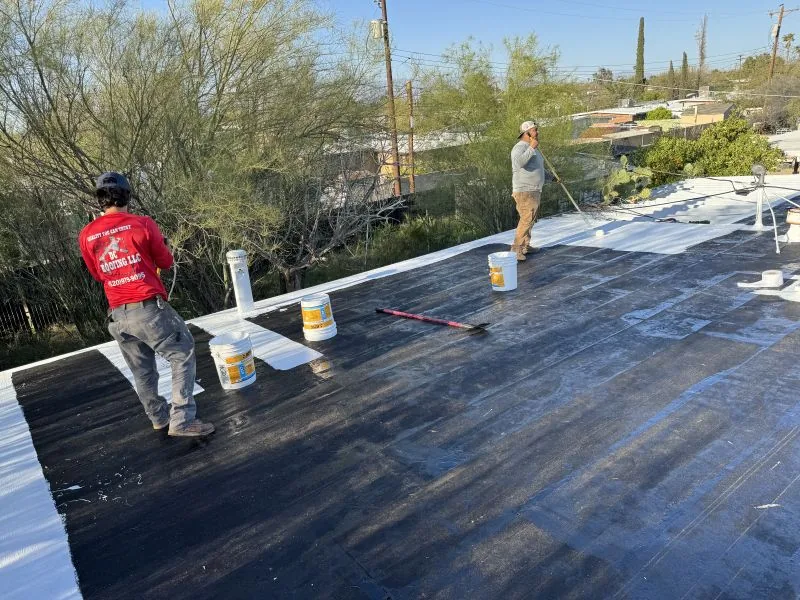
How Our Silicone Roof Coating Process Works
- 1
Roof Walk and Moisture Check
David walks the roof, checks drains, curbs and penetrations, and looks for soft spots or trapped moisture. When the roof calls for it, we cut a small test square to see the condition of the insulation. If a coating is not the right fix, you hear that before any work is scheduled.
- 2
Surface Cleaning
We pressure wash the entire roof to remove dirt, dust, chalky old coating, loose gravel and bird droppings. Silicone will not bond to a dirty surface, so this layer has to go first.
- 3
Repairs and Priming
Cracks, open seams and blisters get repaired with compatible materials, and wet insulation is cut out rather than covered. Where the existing surface needs it, a compatible primer goes down and adhesion is checked before the full application.
- 4
Detail Seams and Penetrations
Seams, parapet walls, drains, vent pipes and evaporative cooler penetrations get reinforcing fabric and base coat. These are the spots where leaks most often start on Tucson flat roofs.
- 5
Silicone Application
The silicone goes on in measured passes, by spray or roller, to the thickness the manufacturer specifies. We check thickness while it is still wet, because a thin coating wears out early in Tucson UV.
- 6
Final Walkthrough
We walk the finished roof for thin spots, missed edges and blocked drain openings, and go over drainage and upkeep with you before we leave.
Ready to Get Started?
Fast response. Licensed ROC #328733. 4.8★ across 100+ Google reviews.
Silicone Roof Coating Services We Provide in Tucson and Southern Arizona
What Tucson Homeowners Gain from Choosing DC Roofing of Arizona
Silicone Roof Coating in Tucson, Oro Valley, Marana, Sahuarita, Green Valley, and Vail
DC Roofing of Arizona provides silicone roof coating services throughout Southern Arizona, including:
Frequently Asked Questions About Silicone Roof Coating in Tucson
How long does silicone roof coating last on a Tucson roof?
Applied correctly, silicone is usually a one-time coat that lasts about 10 years, but the real number depends on your roof's condition before we start. Tucson's monsoon storms and summer sun are tough on any surface, so proper prep and a full cure before storms matter more than the product itself. Roofs with good drainage and a sound deck get the longest life out of a coating. Roofs with hidden moisture or structural problems won't last, no matter how good the silicone is. We back our coating work with a 5-year labor warranty.
Can silicone roof coating be applied over an existing acrylic coating?
Usually not without extra steps. Silicone doesn't reliably bond to acrylic, so it typically takes heavy prep, a compatible primer and an adhesion test, and some silicone products aren't approved over acrylic at all. Skipping that step leads to peeling and early failure. We check the existing surface on every job, since many Tucson flat roofs already carry an acrylic layer from years of past coatings and patching.
Why does my flat roof hold water after monsoon storms?
Ponding usually comes from a sagging deck, a drain sitting too high, or an old evaporative cooler curb blocking flow. It is common on older flat roofs where years of patching have flattened the original slope. A coating alone won't fix this, since it doesn't change how water moves off the roof. We check for low spots on every inspection, because tapered insulation or a drain fix sometimes has to happen before any coating goes down.
What happens when your crew arrives to inspect my roof?
We walk the full roof surface, check every drain, curb and penetration, and look for soft spots or trapped moisture underneath. When the roof calls for it, we cut a small test square to check the insulation, since a roof can look fine from a ladder and hide soaked material underneath. David does the inspection himself, so you get a direct look at your roof's real condition, not a guess from the ground. The inspection is free.
Is silicone roof coating a good fix for an old, patched-up roof?
Not always. If your roof has a string of patched seams, a brittle membrane or gravel showing through, that's usually a replacement situation, not a coating job. Silicone protects a sound surface, but it can't rebuild a deck that's failing underneath. Paying for silicone on a roof at the end of its life just delays a bigger problem, and we'll tell you straight if replacement makes more sense.
Why does silicone coating look dirty after a couple of years?
Silicone tends to hold onto dust and dirt more than acrylic does, so it can look dingy over time, and that dirt can dull its reflectivity somewhat. The coating keeps doing its waterproofing job, and Tucson's dust and dry heat make the change more noticeable. We explain this upfront so you're not surprised in year three.
Can silicone coating be applied over my existing foam roofing?
Yes, over sound, dry foam. Most foam roofs around Tucson are recoated with acrylic elastomeric, which costs less, but silicone is the better topcoat where water sits after storms because of its ponding-water resistance and UV stability. Keep in mind that once foam is coated with silicone, every future recoat has to be silicone too.
Why do silicone roof coating bids vary so much?
The biggest differences are coating thickness, prep and repairs. A thin coating costs less to install and wears out faster, and a bid that skips power washing, priming or reinforcing fabric at penetrations will always come in lower. Roof condition and the number of vents, drains and curbs also change the price. When you compare bids, compare what's inside them: dry mils, what prep is included, which repairs are in the price, and whether the applicator is manufacturer-certified. We'll put the specifics in writing after we've seen the roof.