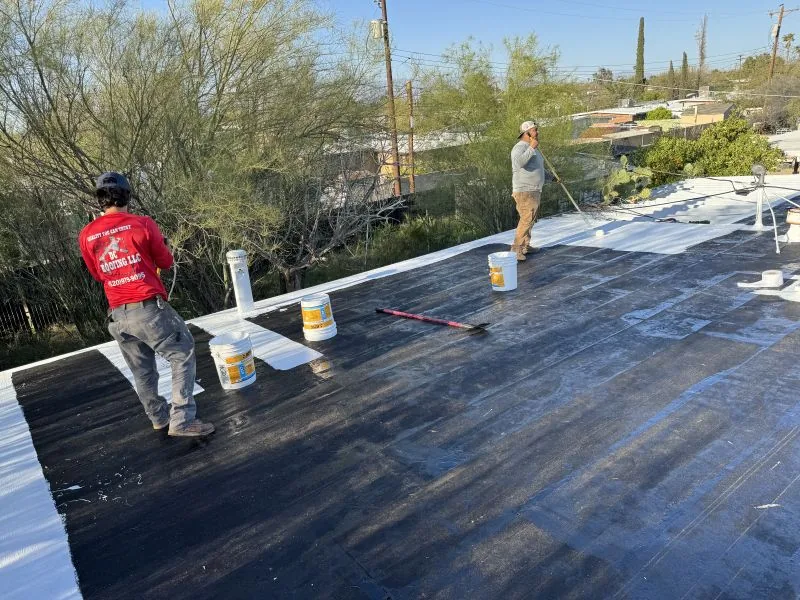
David Contreras, owner of DC Roofing of Arizona, has been roofing in Tucson since 2011, and he's the one who climbs up and looks at the Green Valley roofs we estimate. Elastomeric coating is the thick white coating most people picture when they think of a coated flat roof. The kind we use is an acrylic elastomeric, which goes on heavier than a plain acrylic coating. On the right roof it's a sensible, affordable way to add years of protection. On the wrong roof it peels and you've paid for nothing. This page is about telling those two apart. We're licensed, bonded, and insured (ROC #328733), with $1M per occurrence and $2M aggregate in general liability coverage, and APOC certified for coating work.
Which Part of Your Roof We're Talking About
A coating is for flat and low-slope surfaces. Tile doesn't get coated. Plenty of homes around Tucson and Green Valley have a tile main roof with a flatter section somewhere else: over an Arizona room, a carport, a covered patio, or behind a parapet wall. If that describes your house, the flat section is the part an elastomeric coating is for, and it's often the part that gets ignored until a ceiling stain shows up.
Elastomeric goes on as a thick liquid and cures into a flexible, seamless white skin. It stretches as the roof heats up during the day and pulls back as it cools at night. It bridges hairline cracks, covers seams, and reflects a lot of the sun that a dark roof would soak up. It is not a structural fix, and it will not dry out a wet roof.
The Drainage Test Comes First
Here's the one rule that decides most elastomeric jobs: acrylic coatings don't hold up where water stands. Water that sits on an acrylic coating for a day or more after rain softens it and wears it away, and those are exactly the spots that leak later. That's why David looks at drainage before he talks about product.
You can do a rough version of this check yourself, from a ladder or a window, without walking on the roof. After the next real rain, look at the flat section the following day:
- Dry, or nearly dry: good sign. Elastomeric is likely a fit.
- A puddle in one low corner or by a scupper: often a clogged drain or a low spot that can be corrected before coating.
- Standing water across a large area: elastomeric isn't the right product there. We'd look at fixing the slope, or at a silicone coating, which handles standing water much better.
The other thing that rules elastomeric out is what's already on the roof. If the roof was coated with silicone at some point, an acrylic coating won't bond to it. Silicone can only be recoated with silicone. Over an older acrylic coating that's still well attached, a new elastomeric coat is usually fine once the surface is cleaned and repaired.
What Has to Happen Before Any Coating Goes On
The coating is the last step, not the first. Most of the work is in the prep, and it's where cheap coating jobs cut corners.
- Check for moisture. If the insulation or deck under the surface is wet, coating over it traps the water in. That part gets repaired first.
- Clean the whole surface. Dust, chalky old coating, and debris all keep a new coat from bonding.
- Repair what's broken. Cracks, open seams, blisters, and loose flashing get fixed before coating, not hidden under it.
- Seal the penetrations. Pipes, vents, and cooler curbs are where flat roofs leak. We build those up with a 3-course mastic method instead of a quick bead of cement.
- Prime where the surface needs it, then apply the coating at the thickness the manufacturer specifies.
Water-based coatings also need the weather to cooperate. They need dry days and warm temperatures to cure, and a rain shower on fresh coating can wash it right off. In practice that makes spring the best time to coat, before monsoon season starts in mid-June.
Green Valley Specifics: HOAs, Permits, and Empty Summers
Green Valley is an unincorporated retirement community in Pima County, made up of dozens of homeowners associations. Many of those associations have an architectural review process. A coating on a flat roof behind a parapet usually isn't something anyone sees from the street, but if the work will change how your home looks, check with your HOA before it starts.
Because Green Valley is unincorporated, building permits go through Pima County. A coating isn't structural work. If prep turns up rotted decking that has to be replaced, that's structural roof work, and Pima County's permit list says structural roof work needs a permit. We'll tell you if your job crosses that line.
If your home sits empty for part of the summer, plan the coating for spring, before you leave. A tired coating plus a monsoon storm plus nobody home is how a small leak turns into wet drywall nobody notices for weeks.
What You Get From Us
David walks the roof himself, and the estimate is measured with aerial measurement software, not guessed. There are no salespeople and no subcontracted crews. Our own crew does the work, and we clean up every day. We apply two coats, which typically lasts about five years before the next recoat. A single coat usually needs redoing in two to three years, so it's worth asking how many coats a quote includes. Our coating jobs carry a 5-year labor warranty, and every project we complete includes free annual inspections. Our elastomeric roof coating page covers the product in more depth, and our post on roof coating benefits covers what a coating can and can't do.
FAQ: Elastomeric Roof Coating in Green Valley
Can a new elastomeric coating go over my old coating?
It depends on what the old coating is. Over an older acrylic coating that's still well attached, yes, once the surface is cleaned and any cracks or blisters are repaired. Over silicone, no. Acrylic won't bond to cured silicone, so a silicone roof has to be recoated with silicone.
My flat roof holds water after storms. Is elastomeric still an option?
Not for the spots where water stands. Acrylic coatings break down where water sits for a day or more after rain. Sometimes the fix is as simple as clearing a drain or building up a low spot before coating. If the whole roof ponds, silicone is the better product.
Do I need HOA approval to coat my roof in Green Valley?
It depends on your association. Green Valley is made up of dozens of HOAs, and many have an architectural review process. A coating on a flat roof behind a parapet usually isn't visible from the street, but if the work changes how your home looks, check with your HOA first.
Do I need a permit for a roof coating in Green Valley?
A coating by itself isn't structural work. Green Valley is unincorporated, so permits go through Pima County, and the County lists structural roof work as needing a permit. If prep turns up rotted decking that has to be replaced, that part of the job may need one. Rules can change, so we check before work starts.
Will a white coating make my house cooler?
A white, reflective roof surface stays much cooler in the sun than a dark one, and that can take some load off your air conditioning. How much you'll notice depends on the roof, the insulation under it, and how much of the house sits under the flat section. We won't promise a number on your power bill.
How long does an elastomeric coating job take?
Most residential coating jobs take one to two days of work, depending on the size of the roof and how much repair it needs first. The coating also needs dry weather to cure, which is why we prefer to schedule in spring, before monsoon season starts in mid-June.
How often will I need to recoat?
With the two coats we apply, plan on about every five years. A single coat usually needs redoing in two to three years. Our coating jobs carry a 5-year labor warranty, and the free annual inspections that come with every project help you catch thin or chalky spots before they turn into leaks.