Expert Elastomeric Roof Coating for Tucson & Southern Arizona
David Contreras, owner of DC Roofing of Arizona, has been applying elastomeric roof coatings on Southern Arizona roofs since 2011. He founded DC Roofing of Arizona in 2020 to bring that hands-on experience directly to Tucson homeowners and property managers - and he's licensed through the Arizona Registrar of Contractors under ROC #328733. When you call about a coating job, David comes out personally to look at the roof, give you a straight answer, and tell you exactly what it needs.
Watch: DC Roofing of Arizona in Action
Signs Your Flat Roof Coating Is Already Failing
Most people don't climb up on their roof every weekend. So by the time you notice a problem inside your home, the coating outside has probably been breaking down for months. We see this a lot on flat and low-slope roofs across Tucson, especially on older properties near midtown and the Sam Hughes neighborhood.
Here's what to watch for, both on the roof and from the ground:
- Bubbling or blistering on the surface. This means moisture got trapped under the coating. Tucson's thermal cycling, where rooftops swing from 160°F in the afternoon to 75°F overnight, makes blisters crack open fast.
- Chalking or powdery residue. Run your hand across the coating and it leaves a white film on your fingers. That's UV degradation. The coating is wearing away.
- Visible cracks or alligator patterns. The surface looks like dried mud. Once those cracks connect, water finds a path straight to your substrate.
- Ponding water that won't drain. If water sits for more than 48 hours after rain, it's eating through whatever coating is left. Monsoon season punishes these spots hard.
- Dark stains or soft spots on interior ceilings. By this point, water is already inside. The coating failed a while ago.
The homeowner calls us about a ceiling stain. They think it's a plumbing leak. But we get up there and find a coating that's been cracking apart for two years around an evaporative cooler penetration. That's one of the most common failure points on Tucson roofs. Those cooler boots take a beating from sun and vibration.
Catching these signs early can save you thousands. Ignoring them just gives the Tucson sun more time to do damage.
Why Tucson's Climate Demands a Different Recoat Schedule
Most recoat timelines you'll find online are written for places that get rain and snow. Not 100-plus days of triple-digit heat. Tucson's desert climate puts a completely different kind of stress on elastomeric roof coatings, and that changes how often you need to recoat.
UV exposure is the big one. The intense Tucson sun breaks down the coating's flexibility over time. White and light-colored elastomeric coatings reflect most of the sun's heat when new, far more than a dark membrane - but even those reflective surfaces degrade faster in high-solar regions. Once the coating loses that stretch, cracks form and water gets in.
Then there's thermal cycling. Your roof might hit 160 degrees in the afternoon and drop to 75 by midnight. That expansion and contraction happens every single day from April through October. We see the effects constantly on flat roofs near the Midvale Park area and older homes throughout Tucson. The coating pulls away from seams, flashings, and around penetrations like evaporative cooler mounts.
Monsoon season adds another layer. June through September brings driving rain and wind-blown debris that test every square inch of your coating. A roof that looked fine in May can show wear by late September.
So what does this mean for your schedule?
- Flat and low-slope roofs in direct sun often need recoating sooner than the general timeline suggests
- South-facing and west-facing surfaces take the hardest UV hit
- Roofs with evaporative cooler penetrations need closer attention at those connection points
- A roof inspection each spring catches thinning before it becomes a leak
David grew up in Tucson and built this company around what the desert actually does to roofs, not what a textbook says should happen. That local knowledge matters when you're deciding whether your coating has another year left or needs attention now.
What Professional Surface Prep Actually Involves
This is the part most people don't think about. Prep work is where an elastomeric roof coating job either succeeds or fails. We spend more time prepping than we do coating, and that's not an exaggeration. A coating failure we get called to fix almost always happened because someone skipped steps during prep - the coating itself was probably fine, but the surface underneath just wasn't ready for it.
Here's what David and his crew actually do before any coating goes on:
- Clear the roof of all debris, loose gravel, and dirt. Tucson roofs collect a lot of desert dust, especially on flat roofs near the Flowing Wells area where older commercial buildings sit low.
- Pressure wash the entire surface. Every square foot. Coating won't bond to a dirty roof, period.
- Inspect for cracks, blisters, open seams, and failed flashing. Around evaporative cooler penetrations especially - those are leak sources we see constantly in Tucson.
- Repair any damage found. That might mean patching cracks, re-sealing seams, or fixing spots where previous coatings have peeled. The coating can't fix structural problems underneath it.
- Apply primer where the substrate needs it. Some surfaces grab the coating just fine. Others don't. You have to know the difference.
- Let everything dry completely before moving forward. Moisture trapped under a coating causes bubbling and delamination fast.
That drying step trips up a lot of contractors during monsoon season. They rush to get the job done between storms. The surface looks dry, but there's moisture hiding in the substrate. David checks conditions carefully because one bad call means doing the whole thing over.
How Elastomeric Coating Is Applied to Flat and Low-Slope Roofs
People ask us about this process all the time. It's straightforward, but every step matters. Skip one and the coating won't hold up through a Tucson monsoon season.
Elastomeric coatings come in several formulations: acrylic-based systems are water-based and the most widely used for general restoration; butyl rubber coatings offer excellent ponding water resistance; and polyurethane formulations provide enhanced abrasion resistance for high-traffic roof areas. One important note: acrylic elastomeric coatings are not recommended for areas where water regularly stands for 24+ hours after rain. For those situations, a silicone coating is the superior choice, or foam roofing if drainage correction is also needed.
For a typical flat or low-slope roof, here's how we do it:
- Full roof inspection. David walks the entire surface looking for cracks, blisters, ponding areas, and failed seams. Around the Sam Hughes neighborhood, we see a lot of older flat roofs with multiple patch layers that need attention before anything else happens.
- Surface prep and cleaning. All dirt, debris, loose material, and old flaking coating gets removed. We power wash when needed. The surface has to be clean and dry, period.
- Repairs first. Any cracks, open seams, or damaged spots around penetrations get fixed. Evaporative cooler mounts are a big one here in Tucson - we see failed sealant around those penetrations on nearly every job.
- Primer application. Depending on the existing roof material, we apply a primer coat. This gives the elastomeric coating something solid to grab onto.
- First coat of elastomeric coating. We roll or spray an even layer across the whole surface. Consistent thickness is everything - too thin and it won't protect, too thick in spots and it cures unevenly.
- Second coat. After the first coat cures, we apply the second perpendicular to the first so coverage is uniform. Two coats is the standard for real protection.
- Final walkthrough. We inspect every square foot: edges, flashings, drains, penetrations. Nothing gets missed.
The whole process usually takes one to two days for a standard residential flat roof. One thing we won't do is coat over a roof that isn't ready. If the substrate is too far gone, we'll tell you. We'd rather give you the honest answer upfront than watch a coating fail six months later. And the weather matters - we schedule around rain and won't apply when moisture is in the forecast.
Buildings in hot climates typically see 15–25% reductions in cooling energy after reflective coating installation. Many elastomeric coating systems also qualify for Energy Star and CRRC (Cool Roof Rating Council) certifications, which can satisfy IECC cool roof requirements for commercial re-roofing projects. Not sure if your roof is a good candidate? A brief inspection gives us the information needed to make an accurate recommendation.
Protecting Your Roof Documentation for Insurance Purposes
Here's something David tells every customer: keep your paperwork. When we finish an elastomeric roof coating job, we provide documentation covering what was done, when it was done, and what products went on your roof. That paperwork matters more than most people think.
If a monsoon rolls through and an insurance claim comes up, your insurer is going to ask questions. They'll want proof the roof was maintained, with dates, and confirmation that a licensed contractor did the work. Without that documentation, you're fighting uphill - claims get delayed or denied because homeowners can't show maintenance records.
We recommend holding onto: the written scope of work, before and after photos, your contractor's license number and proof of insurance, any inspection reports, and invoices with dates clearly listed. Our ROC license number is 328733, and we carry full liability and workers' comp insurance. We include all of this in the project file we hand over to you.
Regular elastomeric roof coating maintenance can also help your position with insurers - it shows you're actively protecting the property, not just waiting for something to go wrong. We keep copies of everything on our end too, so you're covered either way.
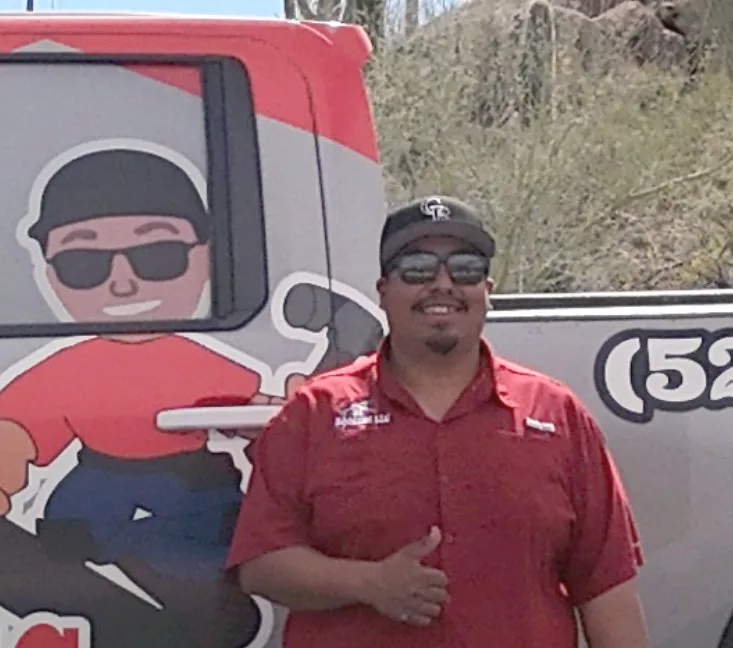
David Contreras, Owner & Founder - DC Roofing of Arizona · Licensed ROC #328733 · Tucson native since 1989
Elastomeric Roof Coating Projects Completed in Tucson
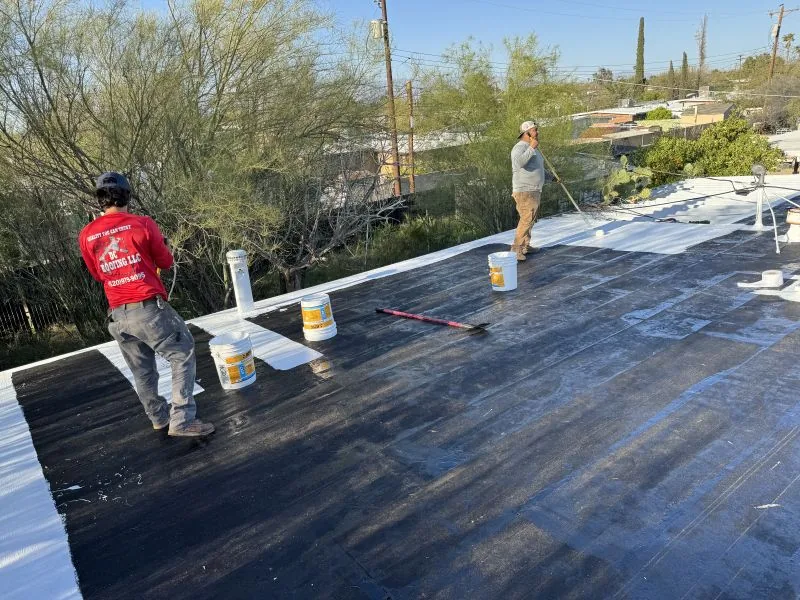
How Our Elastomeric Roof Coating Process Works
- 1
Full Roof Inspection
David walks the entire surface personally, looking for cracks, blisters, ponding areas, failed seams, and evaporative cooler penetration damage. This assessment determines whether coating is the right fix and which formulation fits your specific roof type and drainage conditions.
- 2
Surface Prep & Cleaning
All debris, loose gravel, and desert dust are cleared. The roof is pressure washed - every square foot. Coating won't bond to a dirty surface, and skipping this step is the number one reason coating jobs fail in Tucson.
- 3
Repairs & Primer
Any cracks, open seams, or damaged spots around penetrations are repaired before any coating goes on. A compatible primer is then applied where the substrate requires it, giving the elastomeric material something solid to bond to.
- 4
Elastomeric Coating Application
We apply the first coat in an even layer across the entire surface - consistent thickness is critical. After the first coat cures, the second coat is applied perpendicular to the first for uniform coverage. Two coats is the minimum for real protection in Tucson's climate.
- 5
Final Walkthrough & Documentation
David inspects every square foot: edges, flashings, drains, and penetrations. We provide full project documentation including before and after photos, product details, and our ROC #328733 license on file - everything you need for insurance records or future claims.
Ready to Get Started?
Fast response. Licensed ROC #328733. 4.8★ across 100+ Google reviews.
Elastomeric Roof Coating Services We Provide in Tucson and Southern Arizona
What Tucson Homeowners Gain from Choosing DC Roofing of Arizona
Elastomeric Roof Coating in Tucson, Oro Valley, Marana, Sahuarita, Green Valley, and Vail
DC Roofing of Arizona provides elastomeric roof coating services throughout Southern Arizona, including:
Frequently Asked Questions About Elastomeric Roof Coating in Tucson
How long does an elastomeric roof coating last on a Tucson flat roof?
With the two coats we apply, an acrylic elastomeric coating typically lasts about five years in Tucson before it needs a recoat. A single coat usually needs redoing in two to three years, and the desert climate can shorten either for some roofs. Triple-digit heat and daily thermal cycling break down the coating's flexibility faster than in cooler regions. South-facing and west-facing surfaces wear out sooner. Roofs with evaporative cooler penetrations need closer attention too. A spring inspection each year helps you catch thinning before it turns into a leak.
Can I apply elastomeric coating over my existing roof coating in Tucson?
Sometimes yes, but only if the existing coating is still bonded tightly to the surface. If it's bubbling, peeling, or cracking, the new coat will fail along with the old one. We see this mistake often on older flat roofs in midtown Tucson. The roof has to be pressure washed, inspected, and repaired first. Skipping prep is the number one reason elastomeric coating jobs fail here.
What causes elastomeric roof coatings to bubble or blister in Tucson's heat?
Bubbling happens when moisture gets trapped under the coating before it fully cures. Tucson's intense heat then forces that moisture to expand, pushing the coating up. We see this most often when contractors rush jobs between monsoon storms. The surface looks dry, but moisture is still hiding in the substrate. Once a blister cracks open, water gets straight to your roof deck. Proper drying time before application prevents this completely.
How do I know if my flat roof needs a full recoat or just a repair?
Small cracks or one isolated soft spot usually just need a targeted repair. But if you see alligator cracking across large sections, widespread chalking, or ponding water sitting more than 48 hours after rain, a full recoat makes more sense. We see both situations regularly on Tucson roofs, especially near Sam Hughes and Midvale Park. The honest answer is you won't know for sure until someone gets up there and looks at the whole surface.
Do I need a licensed contractor for elastomeric roof coating work in Arizona?
Yes, Arizona requires a licensed contractor for roofing work, including elastomeric coating jobs. The Arizona Registrar of Contractors issues the license, and you can verify any contractor's status before you hire. This matters because unlicensed work can void your homeowner's insurance claim if a leak happens later. DC Roofing of Arizona operates under ROC #328733 - always ask for an ROC number before anyone gets on your roof in Tucson.
When is the best time of year to schedule elastomeric roof coating in Tucson?
Spring is the best window, typically March through May, before monsoon season arrives and temperatures climb past 110 degrees. The coating needs dry conditions and moderate temperatures to bond and cure correctly. Scheduling before June also gives your roof a fresh protective layer right before the hardest months of UV exposure and monsoon rain. Fall is a solid second option if you missed the spring window.
What is the difference between elastomeric and silicone roof coating?
Both are flexible, reflective coating systems, but they differ in key ways. Acrylic elastomeric coatings are easier to apply and lower cost - but they degrade in areas with persistent ponding water and require dry conditions during application. A two-coat job typically lasts about five years before a recoat. Silicone coatings are more expensive, typically last about 10 years when applied correctly, and are fully ponding-water-resistant - making them better suited for flat roofs with drainage challenges. In Tucson's monsoon climate, we recommend silicone for roofs with any history of ponding and elastomeric for well-drained applications.
How much does elastomeric roof coating cost in Tucson?
Elastomeric coating in Tucson typically runs $1.25–$3.00 per square foot applied, depending on the number of coats, surface condition, and product selected. A 2,500 sq ft flat roof on a Tucson commercial building might run $3,000–$7,500 fully completed. This is significantly less than full membrane replacement at $5–$15+ per square foot. Call (520) 979-9095 for a free estimate.